
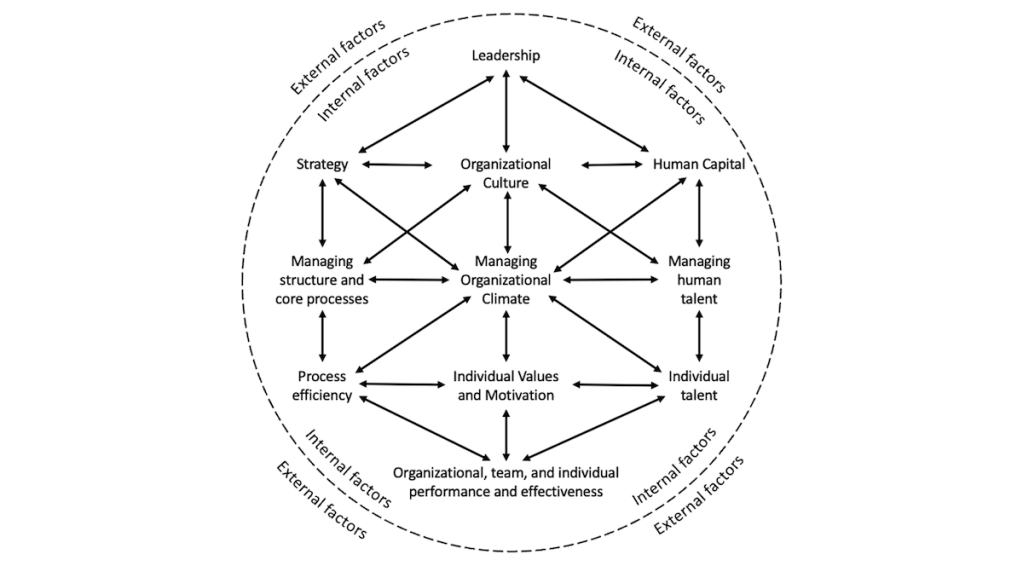
Managing international schools is a challenging task due to the constantly changing environment they operate in. These schools are interconnected with their surroundings, making them open systems. Any organizational change can have an impact on the entire system, so school leaders need to consider the organization as a whole when implementing any changes.
According to the open systems theory, organizations are in a constant exchange of information, resources, and energy with their surroundings. Any changes in the environment can have an impact on the organization’s functioning. In the case of international schools, the environment encompasses not only the local community but also the global education community, which is continuously evolving and facing new challenges and opportunities. Therefore, school leaders should be aware of these changes and must be open to adapting the organization to cater to the changing needs of the environment.
When aiming to implement organizational changes in international schools, leaders need to consider the intricate nature of the institution. These schools usually consist of a diverse student body from various cultural backgrounds, with faculty and staff members hailing from different countries and having different cultural norms and expectations. Furthermore, the school may be overseen by a board of directors or trustees and may have to adhere to national and international regulations and standards.
To effectively navigate the complexities of organizational change in schools, leaders must adopt a holistic approach that takes into account the entire organization, rather than any one aspect in isolation. This involves engaging with all stakeholders within the school community, such as students, teachers, staff, parents, and the board of directors or trustees. By involving everyone in the change process, school leaders can ensure that the change aligns with the school’s mission and values, and that everyone is fully invested in the success of the transformation.
One effective way to drive change in international schools is by utilizing Appreciative Inquiry (AI) methods. AI concentrates on strengthening and enhancing an institution’s existing capabilities rather than fixating on its shortcomings. This approach proves especially valuable in international schools, as it prompts administrators to acknowledge and value the school’s individual diversity and strengths, while also pinpointing areas that require improvement.
To utilize AI technology, educational leaders initially communicate with stakeholders to recognize the school’s strengths, which may include a robust community, committed teachers, or a creative curriculum. After identifying these strengths, the next step is to pinpoint areas for development and enhancement, using the resources that are already available. This method fosters a positive and optimistic atmosphere within the school, encouraging stakeholders to collaborate effectively towards a shared objective.
To bring about organizational change in international schools, a systems thinking approach can be quite effective. This holistic approach emphasizes the interrelationships and interdependence of various parts of the organization. By utilizing this approach, school leaders can identify the root causes of any problems, rather than merely addressing the symptoms. By understanding the underlying causes of problems, leaders can develop more sustainable and effective solutions.
To utilize systems thinking, school administrators first create a comprehensive map of their organization, taking into account its structure, processes, and culture. They then delve into identifying the ways in which these elements relate and depend on each other. This method allows for a deeper understanding of the organization, enabling administrators to devise more impactful strategies for improvement.
School leaders must consider the effects of organizational change on the school community, in addition to these methods. Change can be disruptive, causing anxiety and stress among stakeholders. To alleviate this, leaders must communicate the reasoning for the change transparently and clearly, while involving stakeholders in the process as much as possible. By doing so, trust can be fostered, and resistance to change can be minimized.
In essence, international schools function as open systems, where they are receptive to and engage with their surroundings. School leaders who adopt a systemic approach can initiate improvements that have a positive impact on the entire institution and its interested parties.
Feature Image adapted from “A Critical Review of the Burke-Litwin Model of Leadership, Change and Performance” by H. Spangenberg and C. Theron, 2013, Management Dynamics, 22(2), 29-48.
 BrettPetrillo.com
Leave a comment